Anna Storgaard
September 23, 2026
What does it take to build an unlonely city?
How can cities help prevent loneliness? Supported by the Ramboll Foundation, a recent landscape assessment explored how urban development can help create connection and belonging. We spoke with four contributors to the Unlonely Cities initiative about the key insights and what comes next.
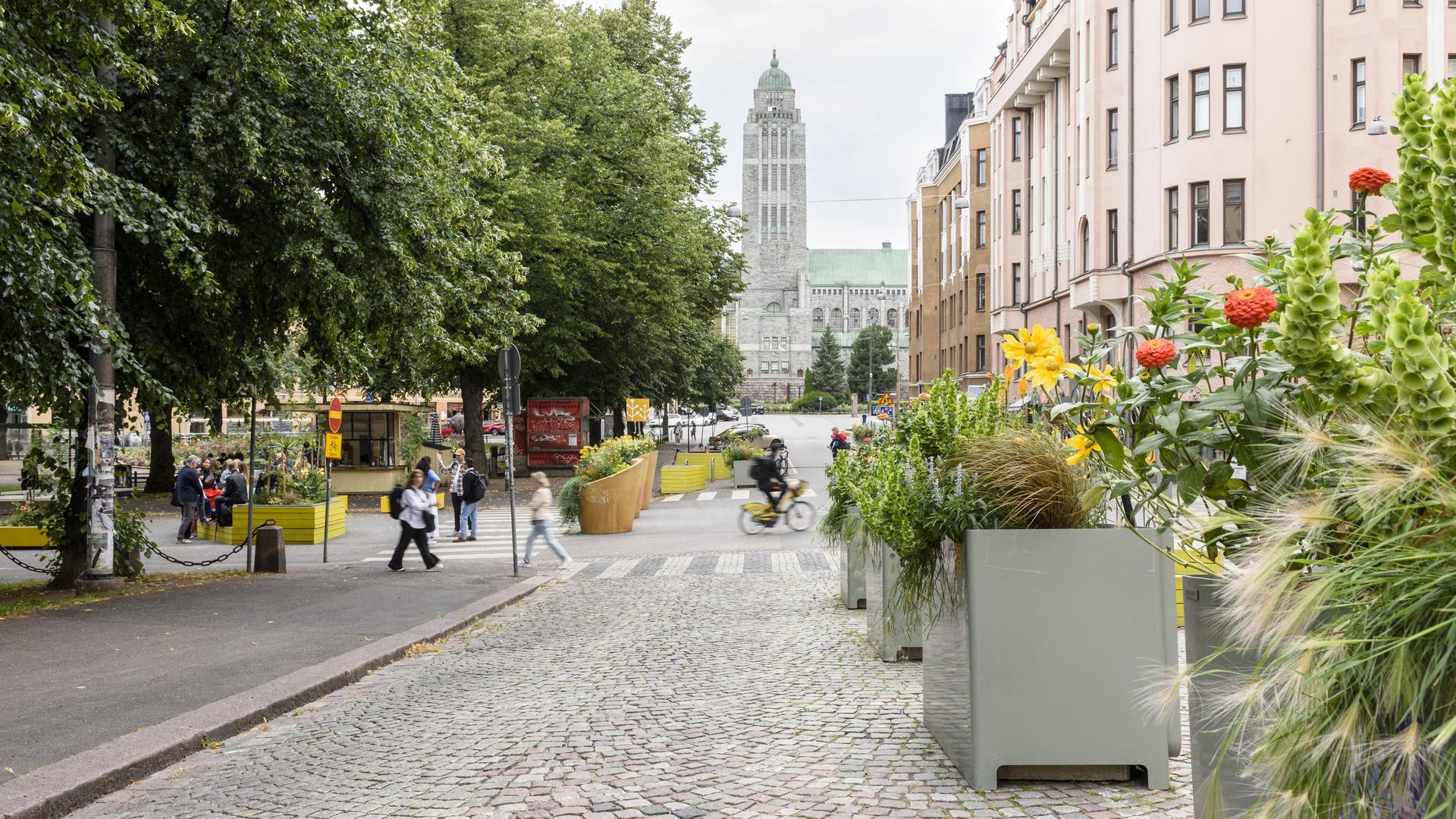
Loneliness is increasingly recognised as a global challenge, affecting one in six people worldwide. Through a review of 62 sources, expert interviews, and stakeholder dialogues, the Ramboll Foundation-supported landscape assessment examined how urban design, programming, and governance can help create more connected communities.
The work forms part of the broader Unlonely Cities collaboration, bringing together Ramboll, Henning Larsen, Novo Nordisk, and BLOXHUB to build practical knowledge that cities can test, adapt, and scale.
One finding stood out consistently across the assessment: design alone is not enough. Physical spaces need programming, activities, and local ownership if they are to support meaningful connection.
The assessment also highlighted other findings. While major city developments often attract attention, findings suggest that small, repeated everyday encounters, from greetings in the street to local meeting places, play a crucial role in building belonging over time.
Why should cities care about loneliness, and what have you learned so far?
Christine Lunde Rasmussen, Market Director, Ramboll Management Consulting
"What we're increasingly seeing is that loneliness isn't only a social challenge. It's also a planning, design, and governance challenge. What surprised me is that the research is already quite clear on many of the factors that support belonging. The bigger challenge is to connect knowledge across factors and to translate that knowledge into practical tools, governance models, and approaches that cities can use."
Jia Xin Chum, Studio Director, Henning Larsen
"One of the strongest findings is that proximity is not the same as connection. Just because people live close to each other doesn't mean they feel connected. Design can create the conditions for encounters, familiarity, and trust, but spaces need to be activated through programming and everyday use if they are to support belonging."
Thomas Hilberg Rahbek, Global Project Lead, Novo Nordisk
"A population's health is rooted in social and cultural determinants, which must encourage cities to consider social connection an integrated part of their response to the public health challenges of our time. The assessment reinforced the systemic nature of the loneliness issue and that no single sector can solve it alone. The solutions lie at the intersection of health, planning, and community development."
Ann-Britt Elvin Andersen, Programme Director, BLOXHUB
"Our cities have become very good at efficiency, and that is worth protecting. But our recent study has made us more aware that efficiency mostly tells us how people move through a city, and less about how they come to belong in it. We think social connection could become a more deliberate part of how we plan and build, alongside mobility, housing, and climate. Much of the knowledge is already out there, it is just fragmented.”
What are you most excited about in the next phase?
Christine Lunde Rasmussen
"The next phase is where learning becomes action. We can begin testing solutions and building evidence from real-world experiences."
Jia Xin Chum
"I'm excited to see how ideas can be adapted across different cities and cultural contexts. The challenge may be global, but belonging is experienced locally."
Thomas Hilberg Rahbek
"Success will be creating approaches that cities can actually use, helping make social connection a measurable and actionable outcome."
Ann-Britt Elvin Andersen
"For me, success is helping cities learn from one another and accelerating action globally. If we can do that, the impact can extend far beyond this collaboration."
Looking ahead
The landscape assessment has strengthened our understanding of how cities can contribute to social connection and belonging, while highlighting important gaps that still need to be addressed. As the Unlonely Cities collaboration continues, partners will build on these insights to test and share approaches that put human connection more firmly at the heart of urban development.